A simple Bing search for the term ecosystem renders the following definition – a biological community of interacting organisms and their physical environment. So now we might want to search for biological community. Simply put, a biological community is a group or a collection of organisms that live together in the same geographic location and particular time. That’s a pretty broad term. A lot can fit within that definition. For example, your backyard is an ecosystem, right? Your backyard might host a number of insects, birds, mammals, and maybe even some reptiles. In other words your backyard gathers a biological community where a number of organisms interact.
Now, you might not have the biggest backyard, but if you look around, you might find a space pretty quickly with some major diversity, both in topography and wildlife. Sometimes these places are right out in the open and screaming, look, I have an ecosystem here. A park is a pretty obvious first choice if you are looking for a more full and diverse ecosystem. In suburban and urban areas, those more pristine and protected type areas, might be harder to come by or might be more constrained by sprawl or development. And then there are others spaces that aren’t protected and are probably not screaming ecosystem to you either. But that doesn’t mean they aren’t out there and can’t sustain a biological community. Look around and you might find an ecosystem in your cul-de-sac, your roundabout, your alley and maybe your nearest industrial zone.
A recent trip to a place called Chamberlayne Swamp reminded me, that you don’t have to go to Yosemite or the Serengeti to find nature. You just have to slow down enough to wonder.
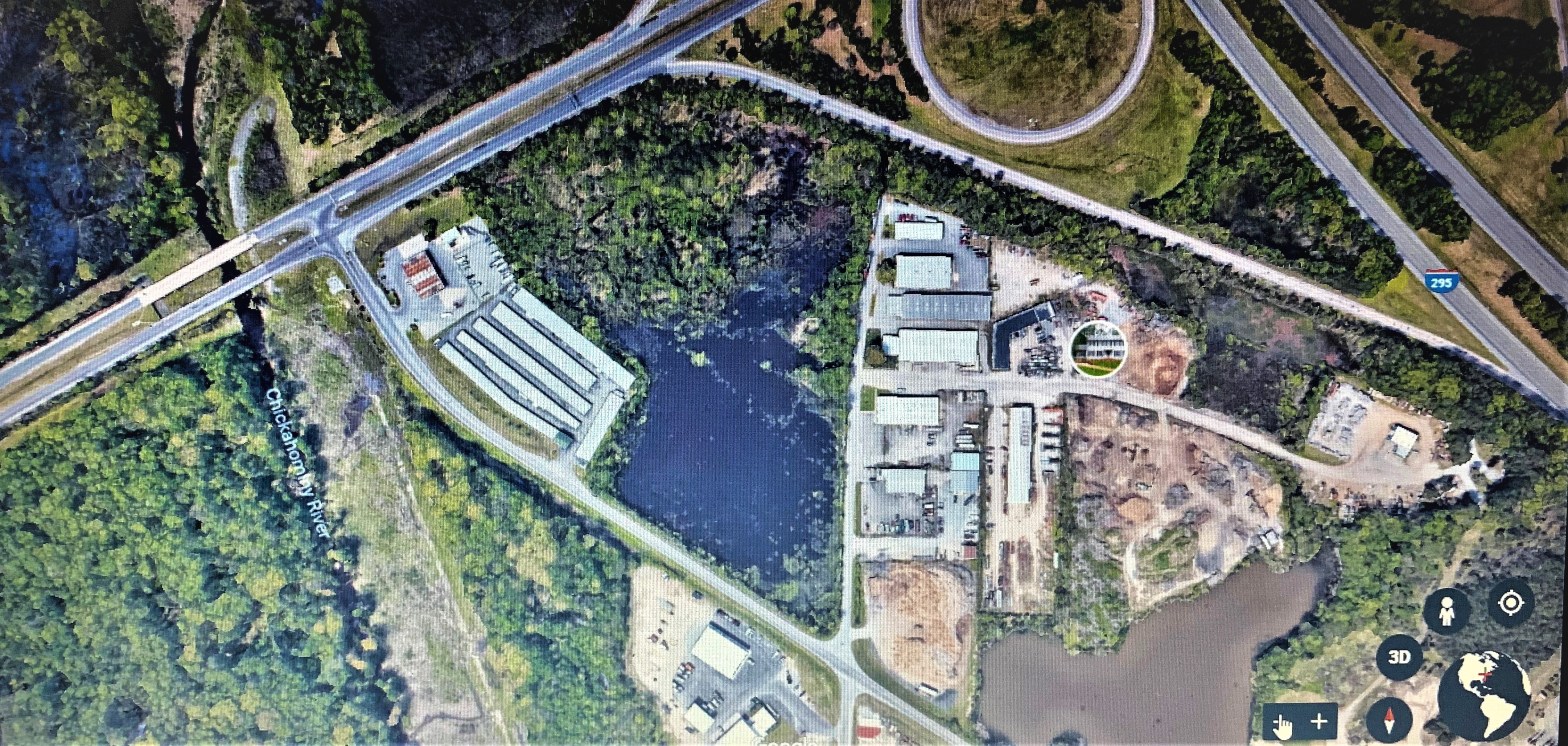
As you can see in the google earth picture, Chamberlayne Swamp is bordered on the west side by a major thoroughfare, a gas station and that set of rectangles is a storage facility. As you go east, you see the swamp itself and another road populated by a number of small businesses. Continue to the east and you see additional swamp. Beyond that is another industrial property. To the south more industrial zone businesses, then the Pahmunkey River, and beyond that a full neighborhood of houses. What you see to the north, is Interstate 295.
My point in listing out the surroundings is that, in the midst of an industrial zone, tucked between interstate, single family neighborhoods, a gas station, and a number of small businesses, is an ecosystem. In the past few years, more than 100 different bird species have visited this hidden nature area. It doesn’t look like much, if you see it at all, but it provides the necessities, if even for a moment, for a number of interacting organisms. It might not fit our expectations of a physical environment, but ecosystems can still prevail within such accommodations.
For me, the recent trip provided my first ever glimpse of the Hermit Thrush.
 the suburban naturalists