Peter’s January 25th post about backyard sparrows described the need for and the use of field marks. Glancing at a group of ground pecking sparrows, you might say they all look the same and be on your way, much the same way Carolina did. However, if you pause and look a little closer, you might notice some distinguishing features. Those distinguishing features are called field marks.
Field marks are mainly used with birds, but can be used with other wildlife and they are helpful for anyone trying to decipher the difference between this specimen and that one. For example, if you were looking at a herd of deer and you wanted to point out a specific member, you might look for some “field marks” that set the one apart. For birding, and locally particularly for sparrows, the field marks are especially helpful. Here’s a method to utilize tracking field marks-
1. Start at one end and work your way to the other as in, the top of the head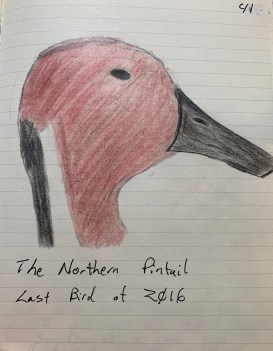
What color is it? Are there stripes? Does it crown?
Then go to the face-
2. On the face, are there any tear drops or stripes and again, what is the color?
3. What color are the eyes?
4. What color is the beak? Is it curved? How long is it?
As you can imagine, this recording, mentally or on paper, all the way down the body, wings, legs, feet and tail of a bird, eventually can give you a full illustration, which can then be cross referenced with a field guide or the jolly old internet. Typically, a few key indicators is all you need to tell one bird apart from another and did you know that birds use these same distinguishing characteristics to tell each other a part and who to be looking for?
Quite often, in the field or in the backyard, what you see is evident. When it’s not, look for the field marks.
 the suburban naturalists